REVIEW · CAPPADOCIA
Cappadocia: Hiking & Undergroud City Tour
Book on GetYourGuide →Operated by TOURMANIA · Bookable on GetYourGuide
Colorful cliffs above, cool tunnels below. This 7-hour Cappadocia tour pairs a classic Red Valley hike with big-ticket cave history: Cavusin ruins, the Kaymakli Underground City, Pigeon Valley, and Ortahisar’s rock castle. It’s a rare day where the scenery is just as dramatic as the human story carved into volcanic stone.
I especially like the pacing and variety. You get a real walk (about 4 km through rose, red, yellow, and orange rock formations), then you shift into narrow corridors, deep wells, and rolling-stone doors underground—totally different “Cappadocia energy.” I also like that you visit multiple signature landmarks in one go: Cavusin’s rock-cut churches, Pigeon Valley’s dovecotes, and Ortahisar’s standout rock formation.
One thing to consider: you’ll be on your feet for hours, including uneven outdoor paths and enclosed underground sections. If you’re sensitive to tight spaces or long, cooler tunnel walks, plan for that before you book.
In This Review
- At a glance: what’s great about this Cappadocia combo
- How the full-day route makes Cappadocia feel like one big story
- Red Valley hike: 4 km of fairy chimneys in rose to orange
- Cavusin ruins: old Greek village remains and rock-cut churches
- Lunch at a local restaurant: fuel before the underground
- Kaymakli Underground City: 4 open levels, deep wells, and rolling-stone doors
- Pigeon Valley: dovecotes carved into rock
- Ortahisar rock castle: the biggest fairy chimney view
- Price and value: what $85 covers (and what it doesn’t)
- Guides, driving, and day comfort: the small stuff that matters
- Who this tour suits best (and who should think twice)
- Should you book Cappadocia: Hiking & Underground City Tour?
- FAQ
- FAQ
- How long is the Cappadocia Hiking & Underground City tour?
- What parts of the tour involve hiking?
- Which underground city do you visit?
- How many levels of Kaymakli are open to visitors?
- Is lunch included?
- What’s included in the price?
- Are beverages included?
- What are the main sightseeing stops?
- Is the tour guided in English?
- Can I skip the ticket line?
At a glance: what’s great about this Cappadocia combo
- Red Valley 4 km hike through fairy chimneys in shades of rose, red, yellow, and orange
- Cavusin rock-cut churches and ruins from an old Greek village
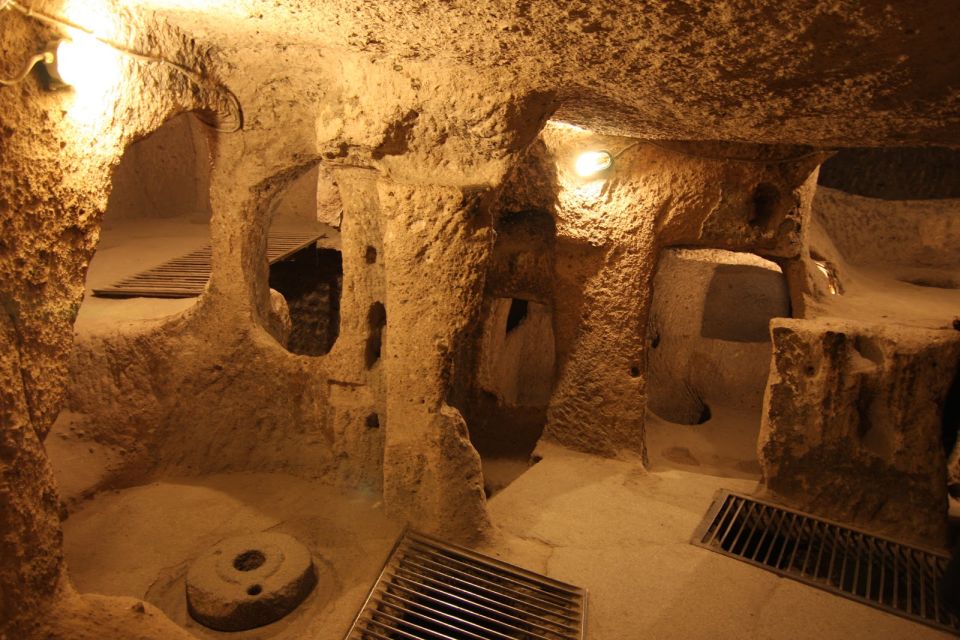
- Kaymakli Underground City opened in 1964, with 8 levels (only 4 open to visitors)
- Underground details like rolling-stone doors, deep wells, and ventilation shafts
- Pigeon Valley dovecotes carved into the rocks
- Ortahisar rock castle view from the town below the biggest fairy chimney
How the full-day route makes Cappadocia feel like one big story
This tour works because it moves through Cappadocia in logical layers. You start with the exterior world—valleys, cliffs, and fairy chimneys—then you step into the underground life that grew out of the same soft volcanic rock. By the time you reach Ortahisar, the whole day clicks into place: you’re seeing how people shaped the land for worship, farming, and survival.
The timing also matters. A 7-hour format means you’re not “sprinkling in” sights; you’re actually getting to experience them. And since hotel pickup and drop-off are included, you’re not wasting time stitching together taxis between scattered points.
You can also read our reviews of more city tours in Cappadocia


Red Valley hike: 4 km of fairy chimneys in rose to orange
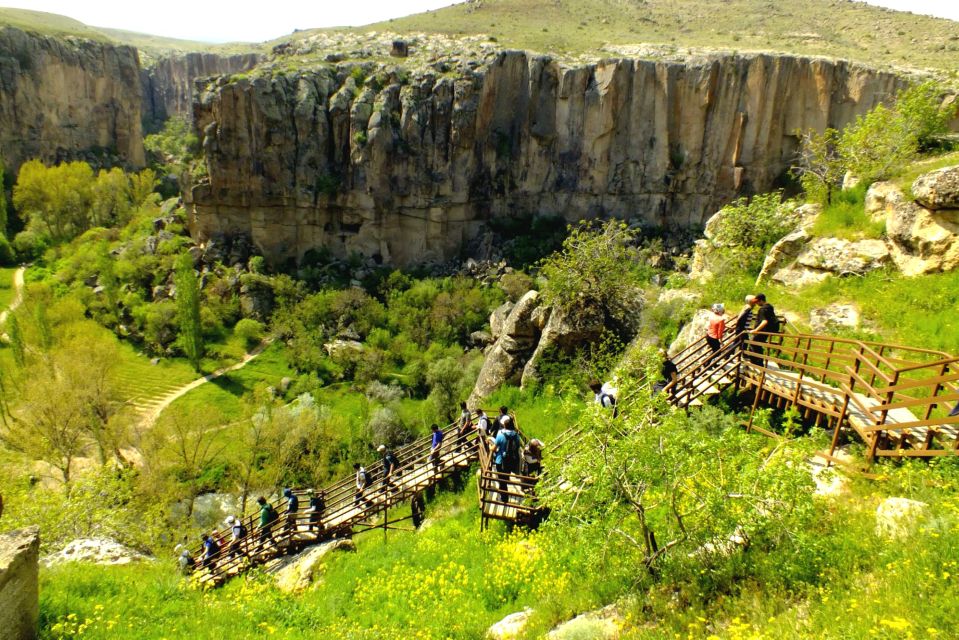
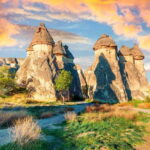
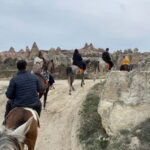
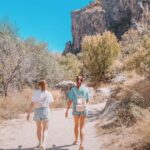
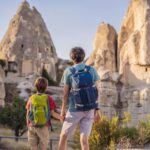
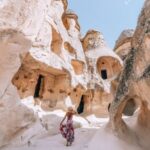
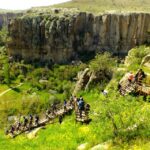
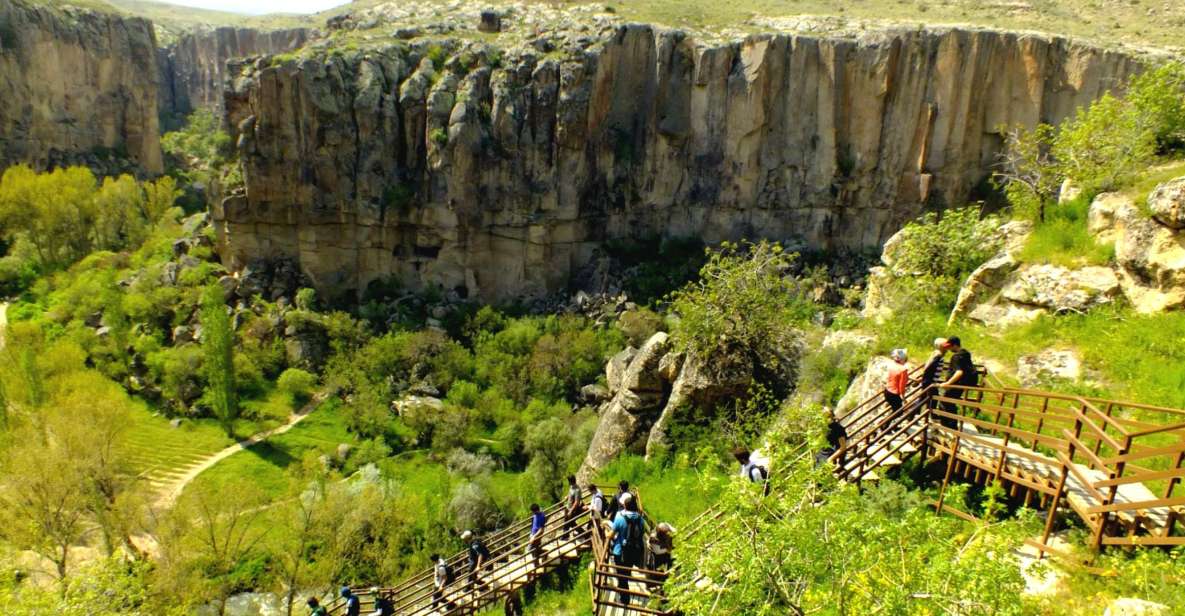
Red Valley is the kind of place where photos don’t really prepare you for the shapes. Your hike runs about 4 km and focuses on the valley’s most famous fairy chimneys—towers and formations that look sculpted by an artist who never stopped working. The rocks show color bands that can read as rose, red, yellow, and orange, depending on the angle and light.
What makes this stop especially good for value is that you’re not just walking for views. You also pass cave features—cave churches, cave houses, and cave tunnels—so the valley feels alive, not just scenic. It’s an easy win for first-time visitors because it mixes nature and human history without making the day feel like a checklist.
Practical tip: wear shoes with grip. Cappadocia paths can be rocky and uneven, and you’ll want sure footing from start to finish.
Cavusin ruins: old Greek village remains and rock-cut churches
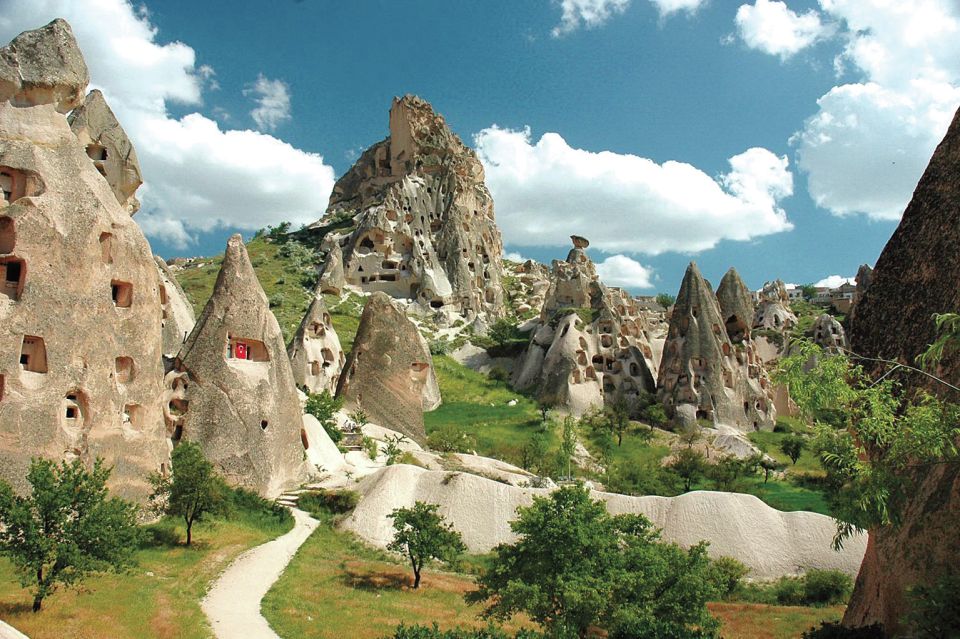
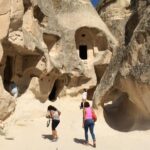
Next comes Cavusin, known for rock-cut churches and the remains of an older Greek village. This part of the day is more about wandering than racing—hiking around the ruins and then walking up toward the rock-cut churches.
What I like about Cavusin is the “texture” of history. You’re not only seeing a single monument; you’re tracing how the settlement sat against the rock. The ruins give context to how people lived, worshipped, and used the landscape long before modern Cappadocia tourism.
You should expect stairs and uneven walking up the hill. If you’re comfortable with that, this is one of the most rewarding parts of the day.
Lunch at a local restaurant: fuel before the underground
Between outdoor walking and underground exploring, you’ll stop for lunch at a local restaurant. Lunch is included, so you can focus on the day rather than budgeting for a midday meal.
This break matters more than it sounds. Kaymakli underground can be cool and physically steady in a way that sneaks up on you—more time spent walking narrow corridors than you might expect. A proper meal helps you keep energy up for the tunnel portion afterward.
Kaymakli Underground City: 4 open levels, deep wells, and rolling-stone doors
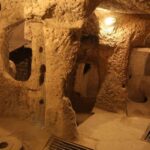
Kaymakli is the big headline stop, and the details are why. It’s the largest underground city in Cappadocia, opened to visitors in 1964, and it includes 8 levels overall. Only 4 levels are open for visitors, which still feels like enough to understand the scale.
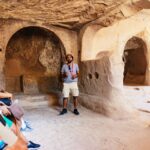
As you tour, you walk narrow corridors and explore rooms and storages carved from soft volcanic stone. It’s not just “a cave you walk through.” You’ll see rolling-stone doors, deep wells, and ventilation shafts—features that help explain how a community could move, store, and survive underground.
Two things make this stop especially memorable:
- The engineering becomes real once you’re inside, because you’re moving through the same tight spaces that dictated layout.
- The doors and ventilation elements show that this wasn’t a one-room refuge. It was an organized system.
Practical tip: underground areas can feel cooler and dim. Bring a light layer if you run hot outside, and take your time in tight sections.
You can also read our reviews of more hiking tours in Cappadocia

Pigeon Valley: dovecotes carved into rock
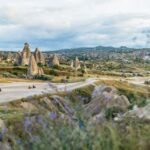
After Kaymakli, you switch back to daylight for Pigeon Valley. It’s named for the pigeon houses, or dovecotes, carved into the rock. The valley is visually interesting because it combines human use with the softer contours of the landscape.
This is also a nice pacing reset. After the enclosed underground portion, the open air and softer sightlines help your brain catch up before Ortahisar.
If you like small, specific details, Pigeon Valley delivers. Look closely at the rock cuts—you’re seeing how people used natural shelter and rock texture for practical life.
Ortahisar rock castle: the biggest fairy chimney view
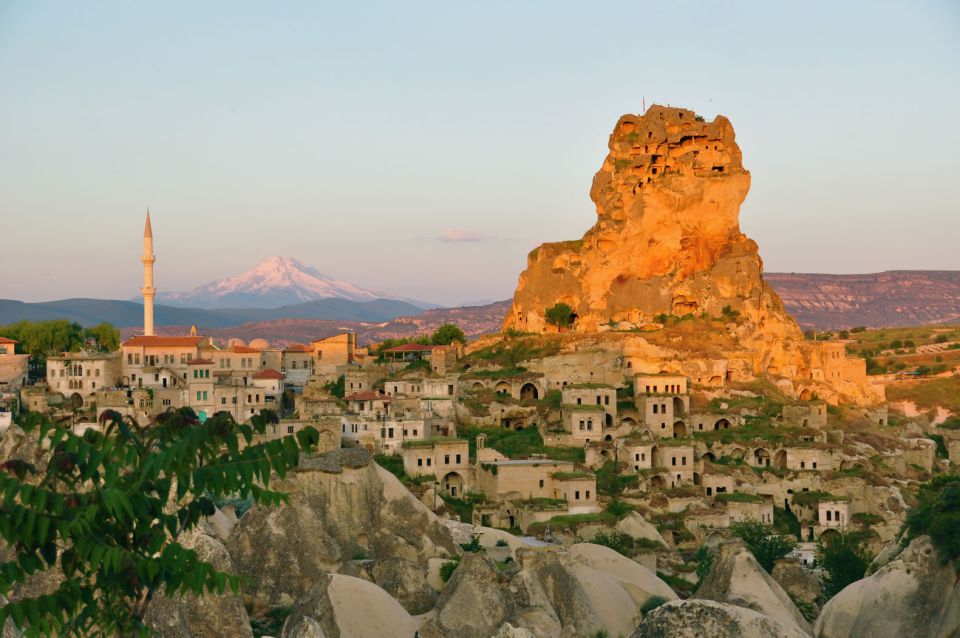
The final highlight is Ortahisar rock castle, described as the biggest fairy chimney of Cappadocia. This stop has a strong payoff: you get sweeping general views over Ortahisar town, and it really does feel like a fairytale settlement, all built under a giant rock.
What makes Ortahisar a smart ending is the perspective shift. Earlier you spent the day inside valleys and underground. Now you see the bigger picture—how these unusual formations dominate the area and shape the towns around them.
If you’re the type who likes to connect dots, this is the moment. You’ll start to recognize how the valley hikes and carved rock features fit into the wider geography.
Price and value: what $85 covers (and what it doesn’t)
At $85 per person for a 7-hour day, the value comes from what’s included, not just the headline number. You’re getting:
- hotel pickup and drop-off
- a live English-speaking guide
- entrance fees to the sites and museums
- parking fees
- lunch
- a skip-the-ticket-line advantage
That combination is what makes the day feel efficient. You’re not paying extra for admissions at each stop or constantly negotiating local transport between scattered Cappadocia sites.
What’s not included is equally important: beverages and personal expenses. So plan to bring water (or buy it at stops) and budget for drinks if you’re picky.
The best use of this pricing is for people who want a “high concentration” Cappadocia day: iconic valleys plus a top underground city without juggling multiple tickets and tours.
Guides, driving, and day comfort: the small stuff that matters
The quality of the day often comes down to two behind-the-scenes elements: the guide and the driver. On tours like this, the guide’s role isn’t just reciting facts; it’s keeping you comfortable and pacing the group so everyone can handle the walking and transitions.
A strong sign from real experience: the guide named Moustapha is described as friendly and informative, and he also helped make sure the group was comfortable and accounted for specific needs. Another plus is the professionalism of the driver, Hassan, especially through narrow or challenging roads.
Why you should care: Cappadocia roads can get tricky, and underground tours mean you’ll be moving carefully. A steady driver and a thoughtful guide make the difference between a “great sites” day and a smooth, confident day.
Who this tour suits best (and who should think twice)
This tour is ideal if you want a classic Cappadocia mix: Red Valley fairy chimneys, Cavusin rock-cut churches, Kaymakli underground city, Pigeon Valley dovecotes, and Ortahisar’s rock-castle viewpoint—all in one guided day.
It’s also a great fit for:
- first-time visitors who want the most recognizable sites
- people who like both outdoor walking and indoor cave history
- travelers who want a guide to connect the geography and the human story
Think twice if:
- you don’t like enclosed spaces or are uncomfortable in narrow underground corridors
- you prefer minimal walking, since you’ll be on your feet through multiple stops and a 4 km hike
Should you book Cappadocia: Hiking & Underground City Tour?
I’d book this if your goal is a single, well-rounded Cappadocia day with maximum variety. The combination is the whole point: fairy-chimney hiking above ground, then Kaymakli’s underground systems with real features like rolling-stone doors, deep wells, and ventilation shafts.
If you’re comfortable with steady walking, this tour gives you strong value at $85 because so much is included—especially the guide time, entrances, and lunch. If you’re unsure about the underground part, read the description carefully and gauge your comfort with narrow, enclosed spaces before you commit.
FAQ
FAQ
How long is the Cappadocia Hiking & Underground City tour?
The tour lasts about 7 hours, though exact starting times vary by availability.
What parts of the tour involve hiking?
You’ll hike roughly 4 km in Red Valley. There’s also walking around Cavusin ruins and up to rock-cut churches.
Which underground city do you visit?
You visit Kaymakli Underground City, the largest underground city in Cappadocia.
How many levels of Kaymakli are open to visitors?
Kaymakli has 8 levels, and only 4 of them are open to visitors.
Is lunch included?
Yes. Lunch at a local restaurant is included.
What’s included in the price?
The tour includes hotel pickup and drop-off, entrance fees, parking fees, lunch, and a live English-speaking guide.
Are beverages included?
No. Beverages are not included.
What are the main sightseeing stops?
You’ll see Red Valley, Cavusin, Kaymakli Underground City, Pigeon Valley, and Ortahisar rock castle.
Is the tour guided in English?
Yes. The tour guide provides live guidance in English.
Can I skip the ticket line?
Yes, the tour offers skip-the-ticket-line service.