REVIEW · CAPPADOCIA
Cappadocia: Green Tour – Ihlara Valley & Underground City
Book on GetYourGuide →Operated by Stoneland Travel Cappadocia Turkey · Bookable on GetYourGuide
Underground and canyon walls in one packed day. This Green Tour strings together Derinkuyu and the Ihlara Valley hike with monastic caves and an onyx workshop, so you see Cappadocia’s geology and local traditions in one efficient run.
I love the way the tour explains how Cappadocia was formed—first at the Göreme Panorama photo stop, then again with the underground sights and canyon views. I also like the variety: a guided walk through Ihlara, time at Selime Monastery, a breather at Pigeon Valley, and a final Uçhisar stop for an onyx shaping show.
The only real drawback is pace. You’ll be on your feet for hikes and climbs, and parts of Derinkuyu are tight—so pack proper hiking shoes and plan for stairs.
In This Review
- Key takeaways before you go
- A fast day map: how the Green Tour fits 4 big Cappadocia hits
- Göreme Panorama: fairy chimneys plus a smart photo window
- Derinkuyu Underground City: protection logic and the feel of tight passages
- Ihlara Valley canyon walk: volcanic origins and a 3.5 km riverside rhythm
- Lunch in Ihlara town: included meal structure, but manage scenery expectations
- Selime Monastery: cathedral-like rooms in a fortress shape
- Pigeon Valley: the birds behind the carved houses
- Uçhisar onyx workshop: a shaping show and a shopping reality check
- Price and value: what $71 buys when you add transportation and lunch
- Pacing, comfort, and who this tour suits best
- Before you go: what to pack for a canyon + underground combo
- Should you book the Cappadocia Green Tour (Ihlara Valley + Underground City)?
- FAQ
- How long is the Cappadocia Green Tour?
- What time are hotel pickups?
- Is lunch included?
- How far do you walk in Ihlara Valley?
- Are museum tickets included in the price?
- What languages is the tour guide speaking?
- Is this tour suitable for wheelchair users?
- What should I bring with me?
- Is there a child fare?
Key takeaways before you go
- Göreme Panorama first: guided context and then free photo time.
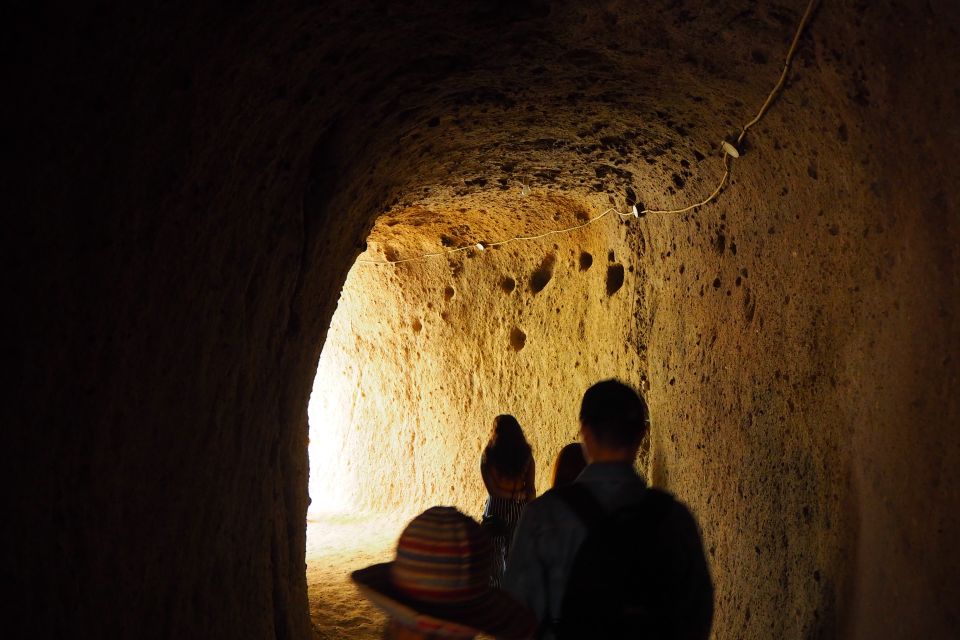
- Derinkuyu in 45 minutes: a guided underground walk with survival-style storytelling.
- Ihlara Valley walk is real: about 3.5 km along the canyon floor.
- Selime Monastery is more than caves: cathedral-like rooms and monastic spaces.
- Pigeon Valley includes the local reason: how pigeons shaped life and architecture.
- Onyx shaping is the finale: a live workshop-style demonstration in Uçhisar.
A fast day map: how the Green Tour fits 4 big Cappadocia hits
This is an 8-hour, hotel-pickup day that’s designed to cover a lot of ground without you planning anything. You’ll start with views, move underground, hike through a canyon, then wrap with monastic sites and an onyx demonstration in Uçhisar.
Pickup times depend on where you’re staying, with common starts like 8:45–9:00 AM for Ürgüp/Avanos/Ortahisar, 9:30 AM for Göreme, and 10:00 AM for Uçhisar. You’re back to your hotel around 5–6 PM, so it’s a full day that works best if you’re comfortable with a structured schedule.
You can also read our reviews of more city tours in Cappadocia


Göreme Panorama: fairy chimneys plus a smart photo window
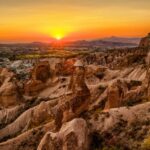
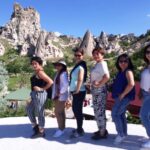
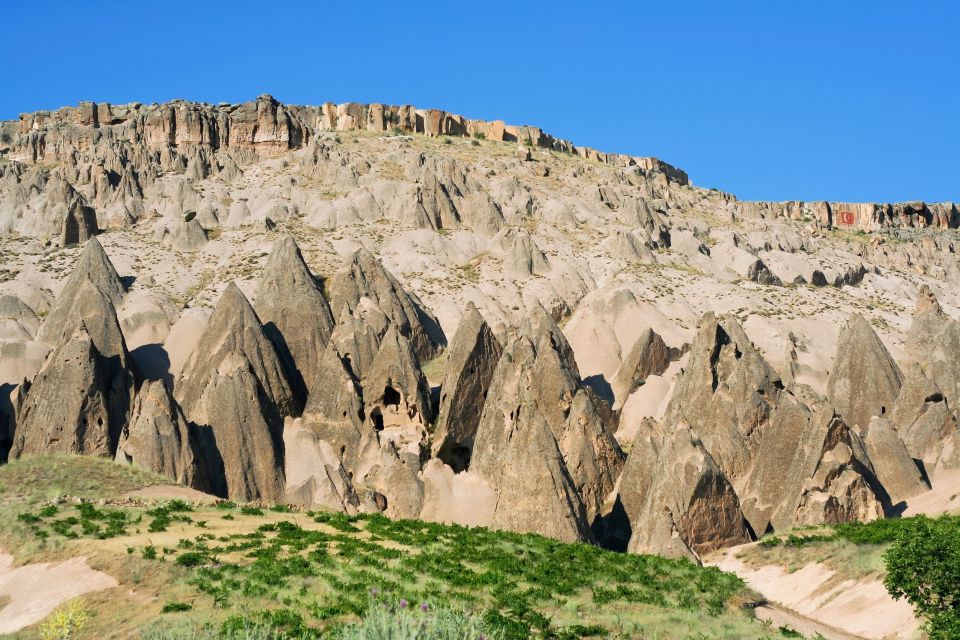
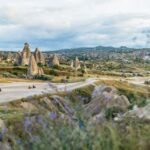
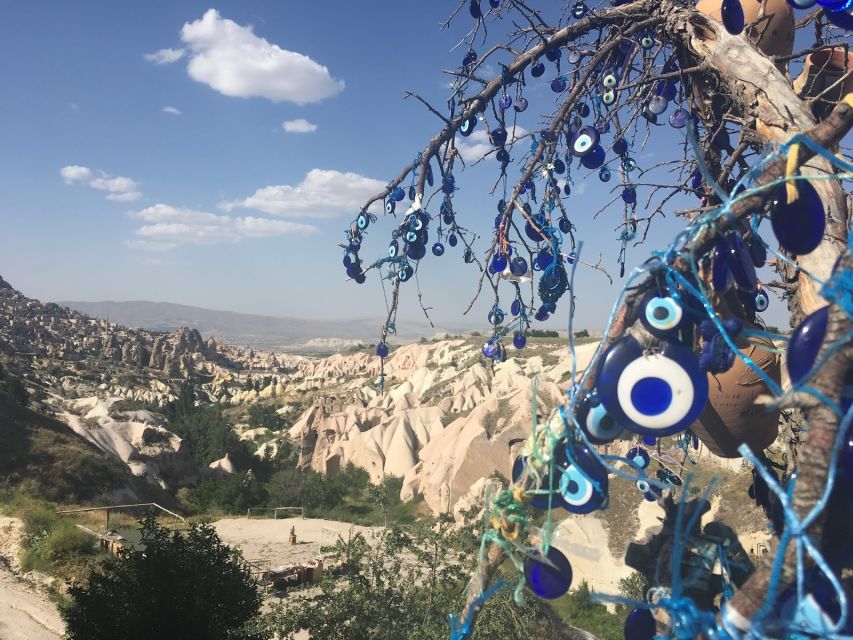
The tour begins at the Göreme Panorama, where you get a guided orientation (about 30 minutes) before you head into free time for photographs. The focus is on the story behind those famous rock shapes—how Cappadocia’s unusual formations formed and why they look the way they do.
This stop is valuable because it gives your eyes a framework. Without that quick explanation, you see pretty cones and odd silhouettes. With it, you start noticing patterns: where the rock towers cluster, how erosion and volcanic action shape the scene, and why this place looks the way it does from so many angles.
After the guidance, you get time to shoot photos. If you like getting the best light, use that free period to test a couple angles instead of committing to the first viewpoint.
Derinkuyu Underground City: protection logic and the feel of tight passages
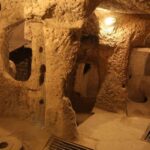
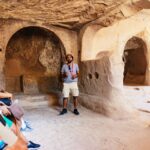
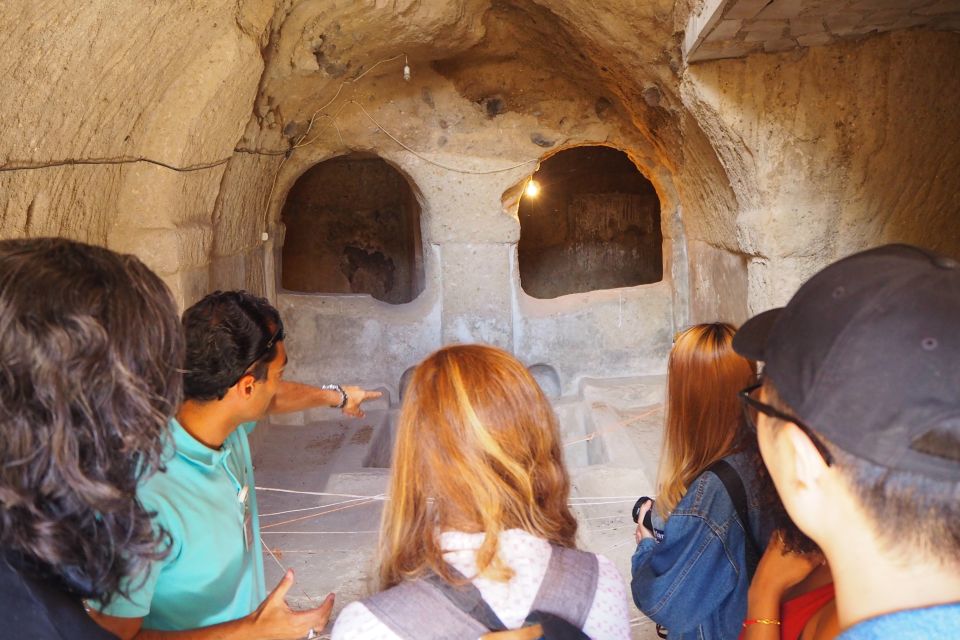
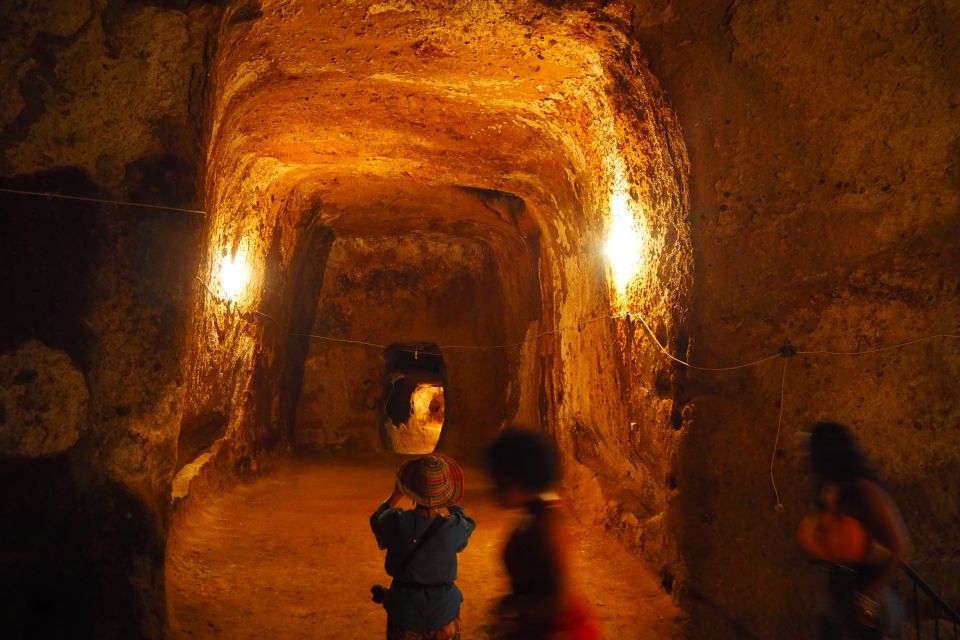
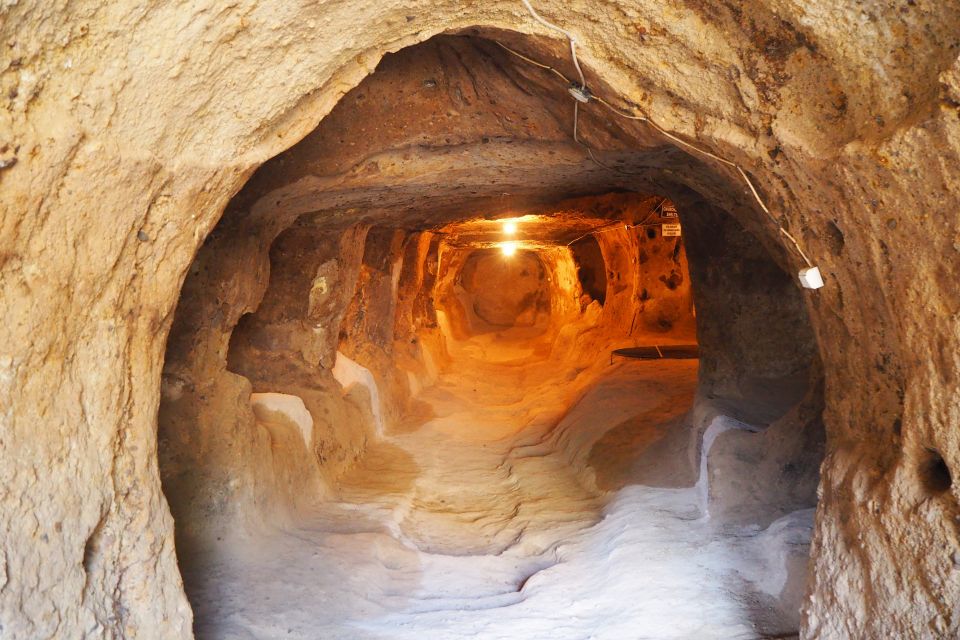
Next comes Derinkuyu Underground City, after roughly a 40-minute drive. The visit includes a guided tour (about 45 minutes), with context for how the city was used over time: locals used it like a natural deep freeze, and later the late Romans used it as shelter against potential Arabian invasions.
That timeline is more than trivia. It helps you understand why the city is laid out the way it is. You’re not just looking at tunnels—you’re imagining daily life underground, then stepping into a system built for safety and survival.
Practical note: Derinkuyu can feel physically challenging. The passages are narrow in places, and the underground setting can feel claustrophobic for some people. If that’s your concern, move at your own pace during the stops and focus on the guide’s explanations rather than trying to sprint ahead.
Also, it’s a good idea to keep your plan simple on this part of the day. Save your big photo sessions for above-ground locations, and treat underground as an exploration experience.
Ihlara Valley canyon walk: volcanic origins and a 3.5 km riverside rhythm
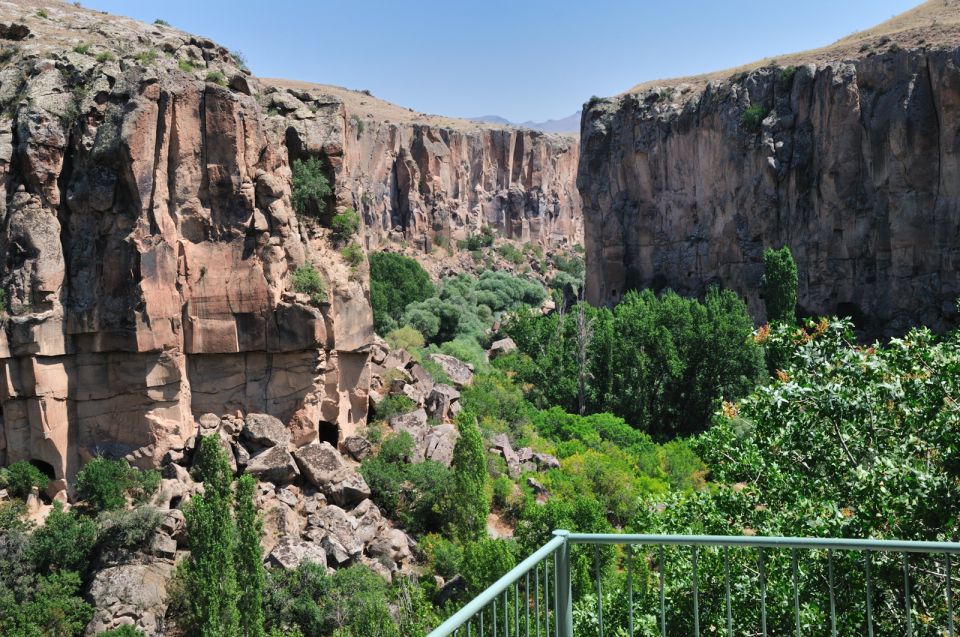
After the underground visit, the tour heads to Ihlara Valley, about 52 km away. You’ll drive around 45 minutes to reach the canyon entrance area and then start the walk with guided context along the way.
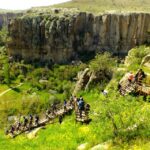
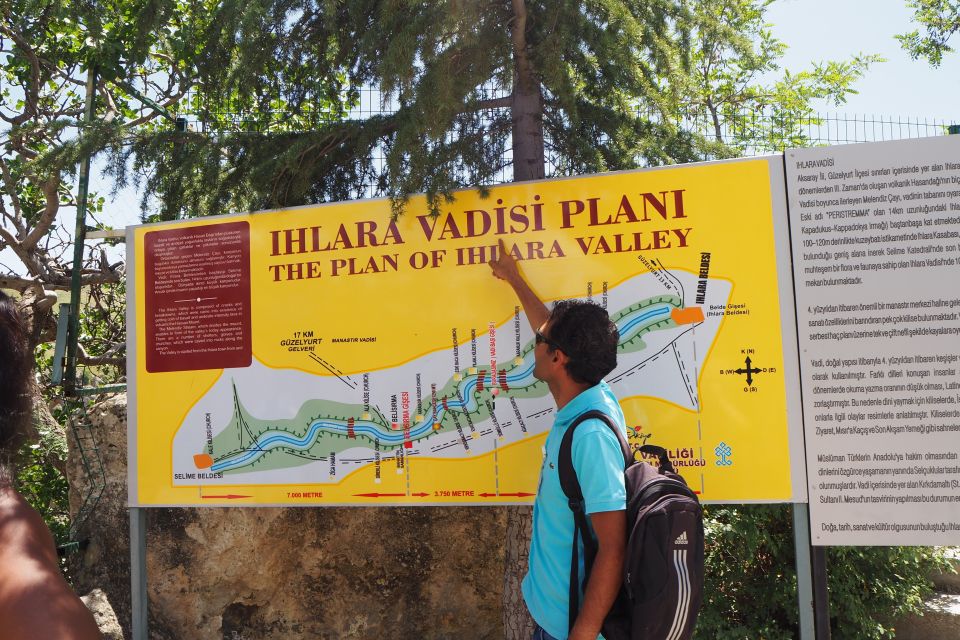
Here’s what makes Ihlara special: it was shaped by volcanic actions linked to Mt. Hasan, and then the Melendiz River eroded and carved the valley over millions of years. The result is an impressive 80-meter-deep canyon, stretching about 14 km in total, with a long history of Christian presence—many churches were carved and painted in different areas.
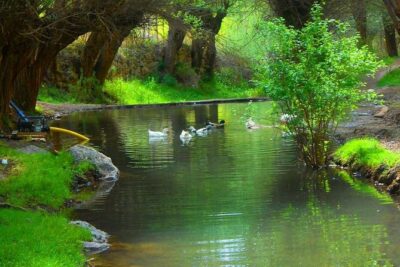
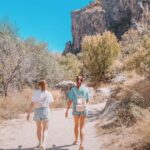
You’ll hike about 3.5 km, with hiking time around 1 hour 15 minutes. This is long enough to feel like a hike, but not so long that you lose the day to walking fatigue. Most importantly, the walk is scenic because you’re moving through a real canyon environment, not just stepping between viewpoints.
What to watch for during the hike:
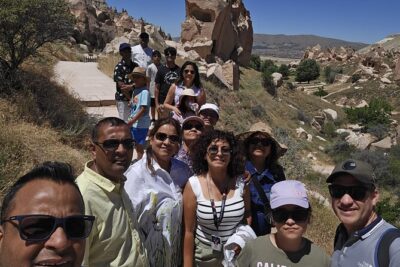
- Staying with the group: the best “story” moments happen when you’re paired with the guide’s points.
- Footwear matters: you’ll want shoes with grip, especially if the ground is uneven.
- Energy management: keep a steady pace so you still enjoy Selime Monastery afterward.
If you love nature breaks inside your history day, this is the heart of the itinerary.
Lunch in Ihlara town: included meal structure, but manage scenery expectations
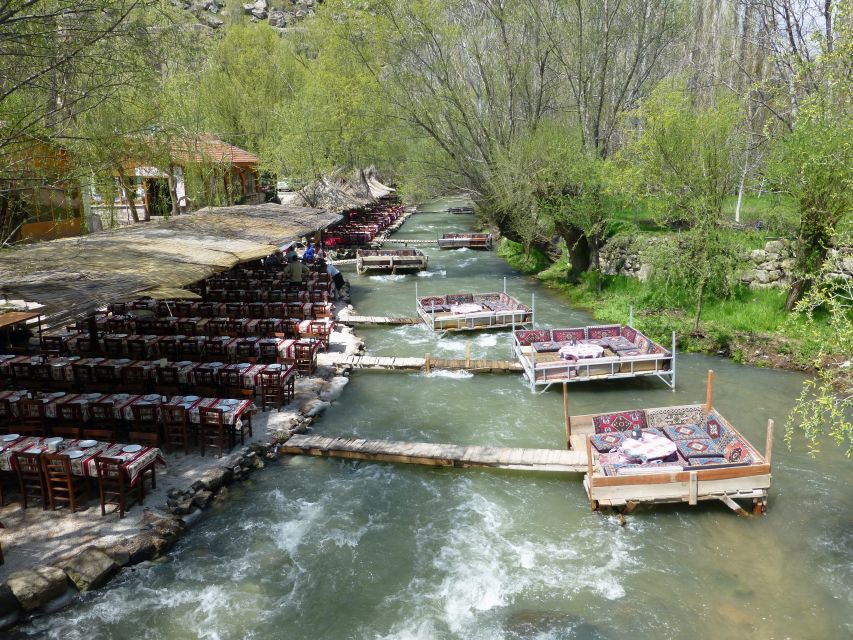
After the valley hike, you’ll get a break and then lunch in Ihlara town (about 1 hour). The meal starts with soup and salad, then you choose a main dish from a list, and finish with seasonal fruits.
This lunch format is practical because it keeps you moving. You don’t spend your whole hour waiting, and you get a clear routine: starter, main, fruit.
A small consideration: lunch location quality can vary depending on the seating and venue details. Some descriptions emphasize a nicer setting, but it’s smart to assume you’re there for food and recovery more than a postcard view. Drinks are not included, so plan to buy water or other drinks if you need them.

Selime Monastery: cathedral-like rooms in a fortress shape
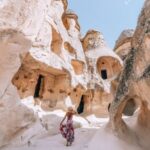
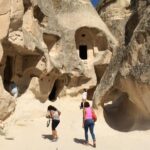
Next is Selime Monastery, often described as looking castle-like at first glance. But the deeper you go, the more it reads like a working monastic settlement: shelters, churches, chapels, bedrooms, storages, and a big cathedral space.
This stop feels different from the underground city. Derinkuyu is about survival underground. Selime is about living and worshiping in a rock-cut world above the canyon floor—more “community” than “panic rooms.”
The guided portion is about 30 minutes, but the approach matters too. Expect a climb up toward Selime Monastery area; the route can exhaust you a bit, especially after the canyon walk.
Timing note: after Selime, you’ll spend time at Pigeon Valley, and there’s an hour built in where you can catch your breath before reaching the pigeon area again. Use it. It makes the second half of the day feel smoother.
Pigeon Valley: the birds behind the carved houses
Pigeon Valley is a short but memorable stop. The top area greets you with pigeons, and the guide connects that scene to how locals used pigeons for more than just symbolism.
The key idea is practical: pigeon eggs and droppings were used for different purposes, which is why local people carved pigeon houses into the slopes of the valley. When you see those carved structures, you understand the “why” behind the architecture instead of just admiring shapes.
Pigeon Valley also works as a reset. It’s a good photo moment, but it’s also a chance to switch from hiking energy to sightseeing energy before the last stop.
If you like storytelling in your travels, this is the kind of stop that makes the whole day feel more connected—geology, faith, daily life, and local labor all in one sequence.
Uçhisar onyx workshop: a shaping show and a shopping reality check
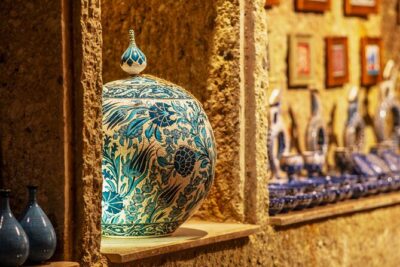
The final stop is an onyx factory in Uçhisar, plus a bit of shopping time. Onyx here is volcanic stone with different colors and mineral variations, and Cappadocia has deposits because of its volcanic background.
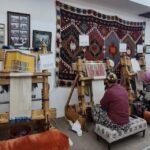
You’ll watch a shaping show where a master demonstrates steps for shaping onyx. This part is one of the tour’s easiest to enjoy because it’s visual and hands-on in the simplest sense—you can watch the stone transformation without needing technical knowledge.
Here’s the balanced warning: onyx shops can turn into sales-heavy moments. Some visitors feel the pitch can run strong, and a few say they would skip pricey purchases. If you’re not interested in buying jewelry, don’t let the demonstration pressure you into spending.
A good strategy: enjoy the show, browse calmly, and set a personal rule for what you’ll pay. If the prices don’t match your expectations, it’s completely okay to leave with just photos and knowledge.
Price and value: what $71 buys when you add transportation and lunch
At about $71 per person for an 8-hour day, the value depends on how you think about time. In Cappadocia, sites are spread out. This tour bundles hotel pickup/drop-off, a guide, museum tickets when the ticket-included option is chosen, and lunch.
That matters because it removes the “logistics tax.” You’re not juggling driving, parking, and re-checking hours between separate attractions. You’re also not paying for multiple separate guides to get context at each site.
What you should verify before you go:
- Whether you selected the option with museum tickets included or without.
- That you’re okay with lunch being included but drinks not included.
- That you’re comfortable with a full day that includes walking and climbing.
If your goal is to see the core Cappadocia stories—rock formations, underground refuge, canyon Christianity, and local crafts—this price can feel like a bargain. If your goal is slow travel and lots of independent exploring, you might prefer a more flexible option.
Pacing, comfort, and who this tour suits best
This is a good fit for first-time visitors who want a broad overview. It’s also a strong choice if you want nature plus history, without turning your vacation into a rental-car project.
It’s less ideal if:
- You strongly dislike stairs or you expect a very relaxed day.
- You get uncomfortable in narrow underground spaces.
- You want lots of free time at fewer locations.
In terms of group energy, the day is usually carried by the guide’s personality and teaching style. From past days on this route, guides such as Selim, Salim, Marve, Tayfun, Mustafa, Selen, and Sevci Can have earned praise for keeping the trip lively and well-paced—plus drivers like Emre have been singled out for careful, comfortable transport.
That matters because Cappadocia can be easy to photograph but hard to understand without interpretation. When the guide connects the rocks, the caves, and the living spaces into one story, the day clicks.
Before you go: what to pack for a canyon + underground combo
At minimum, bring:
- Passport (required for entry)
- Sunglasses
- Hiking shoes (you’ll want grip and support)
Because drinks aren’t included, plan to buy what you need during the day, especially if you’re walking in warm weather.
One more practical tip: if you’re sensitive to tight spaces, mentally prep for Derinkuyu and move slowly. You’re allowed to take your time. The point is understanding the place, not “powering through” it.
Should you book the Cappadocia Green Tour (Ihlara Valley + Underground City)?
Book it if you want a one-day highlight program that mixes Ihlara Valley hiking, Derinkuyu’s underground story, Selime Monastery’s cathedral-like cave complex, and an onyx shaping show in Uçhisar. With pickup/drop-off and lunch included, it’s a solid value for the amount of ground you cover.
Skip it or rethink if you want a quiet, unhurried day, you’re not comfortable with climbs and narrow underground corridors, or you dislike craft-shop sales moments. You can still enjoy the onyx demonstration, but don’t count on this stop being purely educational.
If you’re the type who likes connecting scenes into a single mental map, this is one of the more efficient ways to do it in Cappadocia.
FAQ
How long is the Cappadocia Green Tour?
The duration is 8 hours.
What time are hotel pickups?
Pickup times depend on your location. Ürgüp, Avanos, and Ortahisar are typically picked up between 8:45 AM and 9:00 AM, Göreme at around 9:30 AM, and Uçhisar at around 10:00 AM.
Is lunch included?
Yes. Lunch is included and lasts about 1 hour. Drinks are not included.
How far do you walk in Ihlara Valley?
You hike about 3.5 km in Ihlara Valley, with hiking time around 1 hour 15 minutes.
Are museum tickets included in the price?
There are two options: museum tickets can be included or not included, depending on the tour option you choose.
What languages is the tour guide speaking?
The live guide provides the tour in English and Turkish.
Is this tour suitable for wheelchair users?
No. The tour is not suitable for wheelchair users.
What should I bring with me?
Bring your passport, sunglasses, and hiking shoes.
Is there a child fare?
Children aged 0–2 can be free, but there’s no seat and no lunch included.