REVIEW · GOREME
Biblical Mysteries of Cappadocia Tour
Book on Viator →Operated by Cappadocia Integrity Travel · Bookable on Viator
Cappadocia has Bible-era clues in unexpected places. This 5–6 hour guided tour strings together Ottoman-era village streets, cave monasteries, and Roman mosaics, then finishes with hands-on craft stops in Ortahisar. I especially love how the guide makes the buildings feel connected, not just scattered photos on your camera roll, and how cave churches and frescoes get explained with clear, practical context.
I also like the real-world pacing: short enough to stay fresh, long enough to actually see wall paintings and mosaics instead of sprinting. The one possible downside is the day includes walking on uneven historic surfaces, so keep moderate fitness in mind, especially if you’re sensitive to stairs and rocky paths.
In This Review
- Key things you’ll notice on this tour
- The “mysteries” feel real when you walk between eras
- Mustafapaşa (Synasos): Ottoman-era streets and an old Greek church
- Keşlik Monastery: cave churches, wall paintings, and 2,000 years of use
- Sobesos Ancient City: Roman mosaics in a site uncovered in 2002
- Soganlı Valley: cave churches, frescoes, and hundreds of pigeon houses
- Ortahisar crafts: carpet weaving and leather that still ties to daily work
- Price and value: what $192.66 buys you in Cappadocia time
- Timing, comfort, and how to prep for the day
- Should you book this Biblical Mysteries of Cappadocia tour?
- FAQ
- What is the duration of the Biblical Mysteries of Cappadocia tour?
- Where does pickup happen?
- Is the tour private?
- What language is the tour offered in?
- How much does the tour cost?
- Is lunch included?
- Are entrance fees included?
- Is the tour suitable for everyone physically?
- What happens if the weather is bad?
Key things you’ll notice on this tour
- Mustafapaşa (Synasos) atmosphere: Ottoman-era architecture and a Greek church setting you can feel in your feet and eyes
- Keşlik Monastery’s scale: cave-complex churches dedicated to St. Michael and St. Stephen, plus old wall paintings
- Sobesos mosaics: a Roman city near Sahinefendi Village, uncovered in 2002, with standout mosaic work
- Soganlı Valley’s rock-cut churches: over 20 churches plus frescoed cave spaces and the pigeon-house landscape
- Ortahisar crafts with a purpose: hand-weaving at a carpet cooperative and a leather workshop with a short fashion show
The “mysteries” feel real when you walk between eras
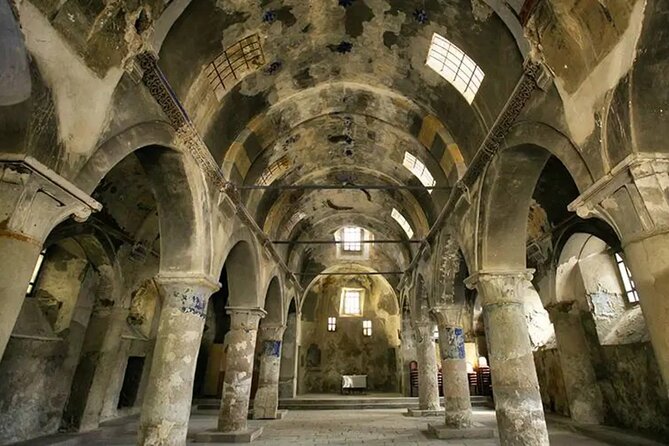
This tour works because it doesn’t treat Cappadocia like one big photo stop. You move through places that belong to different chapters of the region’s story, and the guide helps you connect the dots without drowning you in dates. The result is that the theme stays grounded: you’re looking at physical spaces—churches, monasteries, mosaics—where people lived, prayed, buried family, and worked.
I like that the pacing is built around short, focused visits. You get time to actually look: at fresco patterns inside rock-cut spaces, at the layout of a cave monastery complex, and at mosaic surfaces that reward a slow glance. Between stops, you’re carried in an air-conditioned vehicle, with bottled water along the way, so you’re not melting while trying to read stone details.
Also, the tour is in English and run as a private activity for your group. That matters in Cappadocia, where crowds can turn a “quick look” into a stress test. With pickup from your hotel about 10 minutes before the start, you start with less fuss and more sightseeing.
You can also read our reviews of more tours and experiences in Goreme.

Mustafapaşa (Synasos): Ottoman-era streets and an old Greek church
Mustafapaşa is a village name you’ll hear tied to Ottoman-era life, when Turks and Greeks lived side by side in the years before Turkey’s War of Independence. What you’ll experience here is architecture that still preserves the feel of that shared world—stone shapes, street rhythms, and church spaces that don’t look like generic tourist sets.
During your visit, you’ll discover the village surroundings and spend time at the old Greek church. This stop is only about 50 minutes, so it isn’t meant to turn into a long museum tour. Instead, it’s a “walk-and-look” stop: you get a sense of how the area held community life, not just religious monuments.
What I like most is that the story isn’t locked behind glass. You’re seeing it in the built environment. If you enjoy places where different cultures layered onto each other over time, this is the kind of stop that makes Cappadocia feel personal rather than distant.
One practical consideration: village lanes can be uneven. Wear shoes you trust, not fragile sandals.
Keşlik Monastery: cave churches, wall paintings, and 2,000 years of use
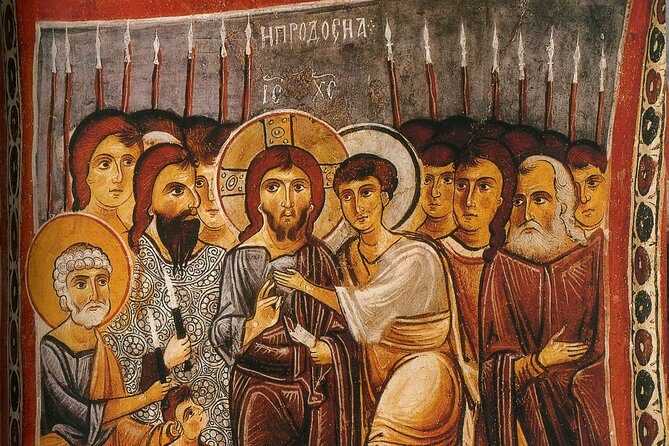
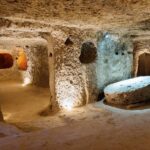
Keşlik Monastery is outside Ürgüp and is known as a cave monastery complex with two churches: one dedicated to St. Michael and the other to St. Stephen. The monastery also includes cave rooms, and it’s described as the most expansive monastery in Cappadocia—plus, it’s been used for about 2,000 years.
This stop does something important for the tour theme. Mustafapaşa gives you human-scale village life. Keşlik shifts you into a space built into rock—where worship, storage, and community life blend into one underground architecture.
You’ll explore the monastery area and focus on wall paintings. Even if you don’t read every label, you’ll feel what these frescoes are doing: marking sacred space, storytelling through color, and preserving identity when life got complicated. And since the area was used as a gravesite in pre-Christian Roman times, you’re seeing a site that kept being repurposed instead of abandoned.
Timing tip: because the stop is around 45 minutes, try not to spend all your time at one wall. Take a few minutes to look at the overall layout first, then circle back for close-up painting details.
Sobesos Ancient City: Roman mosaics in a site uncovered in 2002
Sobesos Ancient City is in the Sahinefendi Village area, and it’s one of those places that feels surprising until you’re standing there. It was discovered by treasure hunters in 2002, and the site is presented as a unique Roman ancient city in Cappadocia where you can see standout mosaics.
This is about 40 minutes, and it’s structured to focus on the mosaics themselves—your guide gives information about the region as you look. The value here is simple: mosaics aren’t just decoration. They’re often map-like in their patterns, meant to shape how you move through a space and what you notice.
What you can do to get more out of this stop: spend your first minute scanning broadly, then slow down for the mosaic sections. If you rush, you miss the small breaks in color and the sense of design that makes mosaics feel like artwork, not rubble.
Also, since this stop is shorter, it’s a nice break from longer rock-church wandering.
Soganlı Valley: cave churches, frescoes, and hundreds of pigeon houses
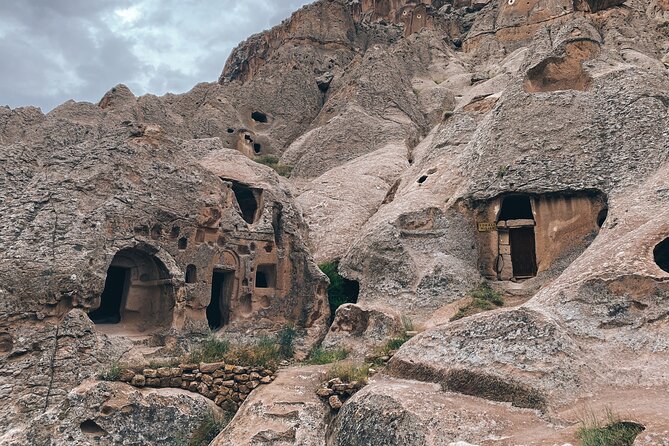
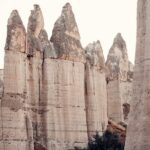
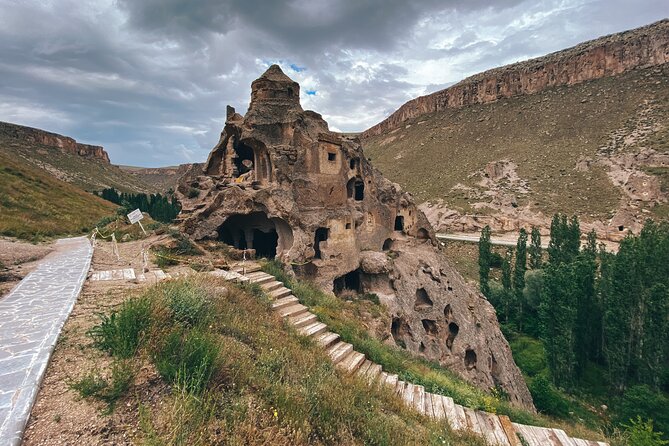
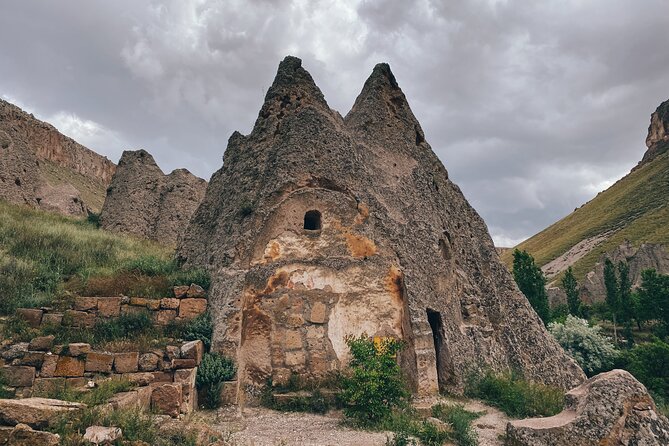
Soganlı Valley is around 40 kilometers southeast of Nevşehir, and it’s described as an ancient rock-cut village with monasteries and churches from the 10th century. You’ll also hear there are over 20 churches, plus Roman-era tombs and hundreds of pigeon houses built into the cliffs.
This stop is about 1 hour 15 minutes, and it’s where the tour leans hardest into the “mysteries” mood. You’ll discover different cave churches and observe frescoes. This isn’t the kind of place where you can see everything in one glance. The walls tend to reward patience: you look, then you realize you’ve been seeing only a surface layer of the story.
The pigeon houses part matters more than it sounds. It gives you a way to connect religion and daily life—people didn’t just come here for ceremonies. They lived around these rock-cut systems, and the cliff architecture supported practical routines.
There’s also a lunch break in Soganlı Valley for about 1 hour. Lunch is not included, so you’ll want to plan for buying food on your own. In practice, that means bring a bit of cash if you use it, or check with your guide about the options available that day.
Drawback to watch for: this is more walking and exploring inside and around cave spaces than a typical city sightseeing block. If you’re prone to fatigue, pace yourself early. Save energy for the fresco sections that catch your eye most.


Ortahisar crafts: carpet weaving and leather that still ties to daily work
The final stretch shifts from sacred spaces to living traditions in Ortahisar. Instead of only viewing, you get brief workshop time that helps explain how the region’s economy and culture work.
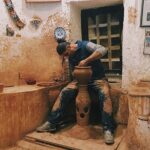
First up is a carpet weaving cooperative. You’ll witness traditional Turkish carpet making, and you’ll learn how the craft connects to the region’s history along the Silk Road. The focus is on hand weaving done by local women, using techniques passed down through generations. Even in a short visit, you can usually spot the patience required—this is slow craft, not factory speed.
Next is a leather processing workshop, reflecting the region’s ties to animal husbandry. You’ll explore the leather factory area, and you’ll also see a short fashion show featuring locally produced leather goods.
I like that this ending stop doesn’t feel like a rushed sales push. You’re shown processes tied to local livelihoods, and you get a clearer idea of why Cappadocia has always been more than just cave churches. The crafts are part of what sustains people now.
How to make this stop worth your time: if you’re considering buying something, ask practical questions about materials and care. If you’re not buying, still watch the process. Learning how the work gets done tends to make the products make more sense, even if you skip the checkout.
Price and value: what $192.66 buys you in Cappadocia time
At $192.66 per person, this tour sits in a reasonable range for a structured Cappadocia day that includes multiple specialized stops. You’re not paying just for transportation. Your ticket price covers the air-conditioned vehicle, a licensed professional guide fee, and bottled water. That matters because it removes the “who’s driving and where are we going next” stress from your head.
Also, the itinerary notes many admissions as free or included at specific sites. At the same time, the general tour info lists entrance fees as not included, so it’s smart to treat this as: some sites may be covered, but don’t assume every church or site entrance is automatically paid for. Your guide can usually clarify what you do or don’t need to pay on the ground.
Best value for: people who want a guided route that connects multiple Cappadocia themes in one day—village life, cave worship, Roman art, then crafts. If you’re the type who gets frustrated when you try to connect too many sites solo, the structure is a strong benefit.
Not the best fit for: anyone who hates structured time and prefers free-form wandering all day with no scheduled stops.
Timing, comfort, and how to prep for the day
Plan for a 5 to 6 hour experience and a schedule that keeps moving. That’s a good thing in Cappadocia, where the real challenge can be logistics: distances between valleys, parking, and the time needed to walk to viewpoints or down into rock-cut areas.
Since the tour recommends moderate physical fitness, prepare for uneven ground and short-but-real walking spurts between photo and observation points. The safest approach is simple: wear comfortable shoes with grip and dress in layers. Even when the day looks mild at the start, the cave spaces can feel cooler.
You’ll likely spend a lot of your time looking at details—frescoes, mosaic patterns, craft techniques—so it helps to bring a phone or camera with enough battery. If you’re using your phone heavily for photos, consider bringing a small portable charger.
Lastly, this experience requires good weather. If conditions are poor, you can be offered another date or a full refund. Cappadocia weather can change quickly, so check the forecast the day before.
Should you book this Biblical Mysteries of Cappadocia tour?
I think you should book it if you want a guided day that connects multiple Cappadocia stories in a way that makes sense on foot. The strongest reasons are the combination of cave churches with wall paintings, Roman mosaics, and workshop stops that explain present-day craft life in Ortahisar. I also like that guides can bring the details together into a narrative, and the tour’s structure keeps you from getting lost between sites.
Skip it if you’re only interested in one style of sightseeing, like just valleys or just museum-style indoor stops. Also skip it if you’d rather travel entirely at your own pace with no set timings.
If you’re building your first Cappadocia trip, this is a solid way to get variety without turning your day into a logistical puzzle.
FAQ
What is the duration of the Biblical Mysteries of Cappadocia tour?
It runs about 5 to 6 hours.
Where does pickup happen?
Pickup is from your hotel about 10 minutes before the tour starts.
Is the tour private?
Yes. It’s listed as a private tour/activity, so only your group participates.
What language is the tour offered in?
The tour is offered in English.
How much does the tour cost?
The price is listed at $192.66 per person.
Is lunch included?
No. Lunch is not included.
Are entrance fees included?
The itinerary notes some sites as free and some as admission included, but the tour info lists entrance fees as not included. It’s best to ask your guide what you’ll need to pay for that day.
Is the tour suitable for everyone physically?
It requires moderate physical fitness.
What happens if the weather is bad?
The tour requires good weather. If it’s canceled due to poor weather, you’ll be offered a different date or a full refund.